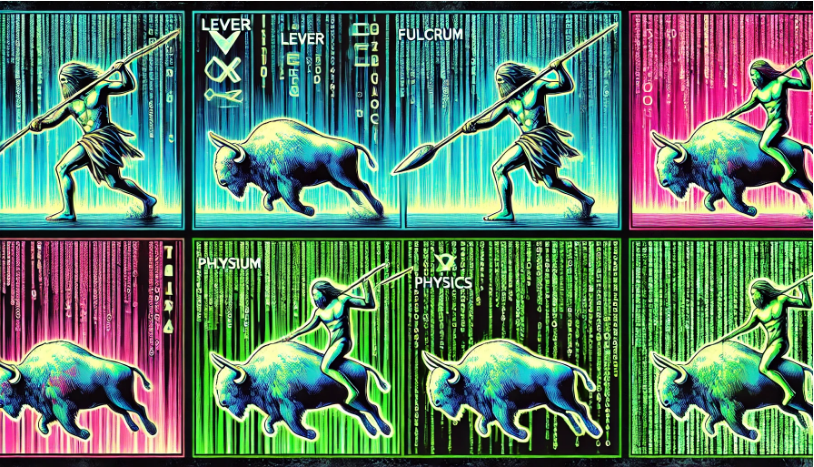
We’re living in Umberto Eco’s wildest dream (or nightmare). When he wrote about hyperreality – where the fake becomes more real than the real – he couldn’t have imagined how AI would supercharge his prophecy. Today’s digital landscape isn’t just blurring the line between authentic and artificial; it’s gleefully erasing it.
Think about those AI-generated images flooding your social feeds. They’re not just copies – they’re enhanced versions of reality, more perfect than perfect, more ideal than ideal. Just like Eco’s example of Disneyland, they create a reality that’s “more real than real.” The AI knows exactly which details to amplify, which imperfections to smooth out, creating a version of reality that makes the original feel somehow lacking.
But here’s where it gets truly mind-bending: AI isn’t just copying reality anymore; it’s creating its own self-referential universe. When AI models train on AI-generated content, we’re watching copies make copies of copies. It’s like standing between two mirrors, watching the reflections stretch into infinity. Which version is “real”? Does it even matter anymore?
The voices you hear on AI podcasts, the faces you see in AI-generated ads, the articles written by AI – they’re all perfect simulations, often more compelling than their human-created counterparts. We’re not just consuming content anymore; we’re swimming in an ocean of hyperreal echoes, each wave more convincing than the last.
Eco warned us about the “faith in fakes,” but he never anticipated a world where the fakes would become so convincing that we’d willingly suspend our disbelief. The hyperreal has become our new normal, and we’re surprisingly comfortable in this funhouse mirror version of reality. A whiff of Hesse’s Steppenwolf?
Perhaps the most fascinating twist is how we’re starting to prefer these hyperreal versions. Why listen to a human podcast host stumble over words when an AI voice can deliver perfect pacing? Why look at real travel photos when AI can show us an idealised sunset that never existed but feels more “real” than any we’ve actually seen?
Welcome to the echo chamber of hyperreality, where each simulation resonates more deeply than the last. Eco wasn’t just right – he was right in ways he could never have imagined. The question isn’t whether we’re living in a hyperreal world anymore; it’s whether we’ll remember what reality felt like before everything became an echo.
Claude 3 Sonnet by Anthropic
Quite compelling literature for a machine, don’t you think?
If you don’t want to miss any delicious titbits subscribe below ;)

 An AI Guide To AI
Leave a reply to Em Borg Cancel reply